“If someone asks, But what is love?/answer, Dissolving the will.” – Rumi, No Expectations
“Soon when that moment comes,/I can say I did it all with love.” – Röyksopp and Robyn, “Monument–The Inevitable End Version”
“To act with faith, however, means not getting seduced by any of its ready replacements. One of the most subtle ways fear can bind us, so quietly that we hardly know to call it fear, is what is known in Buddhist teachings as ‘fixated hope.’ Fixated hope, like hope itself, resembles faith in that both sparkle with a sense of possibility. But fixated hope is conditional, circumscribing happiness to getting what we want.” – Sharon Salzburg, Faith
I’m going to share something vulnerable because I am a voyeurist at heart. On Saturday night, I found myself sobbing down Vine Street, and sobbing on the Market Frankford Line. I’d be remiss to say that there wasn’t something capital-R Romantic about this–about walking down Thompson Street, bleary-eyed, blasting “Otra Vez” on my headphones. I am no stranger to heartbreak.
I am also no stranger to manufactured catharsis. It’s impossible for me to discern at this time whether I was crying over W, or whether I was crying over my impending aloneness. Regardless, the urge to “make the most of my pain!” rings loud, which sometimes means inducing more of it (more pain, that is) through re-reading texts and listening to sad albums (Sam Cooke is for when you’re feeling discouraged; Roy Orbison is for when you’re feeling hopeless).
It is on Day Three that I am sitting down to process, to sit on the sofa and feel the pain of Being Broken Up With. I’ve read enough pre-digested Buddhist texts to know that I need to breathe into the pain in order to transmute it into something palatable. Sometimes I feel like breathing into the pain is a luxury that only the overindulged can afford, because despite the fact that my pain takes on the qualities of overwhelm and devastation, it is not the pain of sickness or addiction or death.
And so I sit, crackly records blaring, pondering the termination of my “fixated hopes,” which take on the shape of desired outcomes. I wonder if these desired outcomes that we pray for, or that millennials and Gen-Zers try to “manifest,” which often take the form of “I want him to be my boyfriend” or “I hope he sends me roses” make evolutionary sense or if they are simply products of post-agricultural fancy. I read in Sex at Dawn that the advent of the agricultural revolution birthed monogamy and a sense of ownership, both of which encompass dreams of boyfriends and roses. Suffice to say, these things were indeed the objects of my rational mind’s “fixated hopes” when thinking about W.
But what were my heart’s desires, apart from the outcomes that are really just pinnacles of post-capitalist success? I certainly wasn’t daydreaming about W before bed and by the end, I didn’t miss him with any sense of palpability when we weren’t together. When I was with him, I enjoyed his company–profusely. But our communication was lacking, and because of this, coupled with my bi-monthly trips and his illness, it became hard to build intimacy. We wouldn’t see each other for weeks and then we’d have to start from the ground up. All of this is to say that I’m not entirely sure if I’ve been mourning more for W or for What Could Have Been.
I’d be remiss to say that things between W and I were off from the start, but as our situationship progressed, it became impossible to deny that our communication was stilted. I believe that I set the precedent for some of this–that I was indeed inspired by the Toxic Dating Creed that one should not be too available. And in the modern relationship, this poses a problem, especially when two parties are trying to build rapport from afar. Texting W was a string of disappointments in miniscule letters, and I often felt that we were in a competition of who could be more apathetic. Such cultivated indifference does not spell for happiness.
When I visited W on Saturday night, I tried to be conscious about “dissolving the will” (because I did care for him deeply) and foregoing my “fixated hopes.” I knew that things were off between us, but I wanted to test out proceeding with love, even if that meant being rejected. This was a far cry from my previous hormone-fueled mentality of “don’t let the door hit you on the way out,” and I am indebted to modern medicine for this.
But what exactly does “dissolving the will” mean? Dissolving the will, to me, means allowing egoic desires to dissipate, and to the best of one’s abilities, to negating pushing for the things that we think will make us happy. This might mean extending compassion to someone even when you dislike them intensely. Of course I didn’t dislike W, to the contrary, but fortunately, he matched my graciousness when suggesting that we “take a step back.” As painful and sob-inducing as it was for me to be told by W that he had started seeing someone new, deep down, I knew that we both approached this situation from a place of love–and in this was reflected a newfound maturity.
That being said, I didn’t realize this when I awoke on Sunday morning overcome by dread. I recall a questionnaire that asked me to rate, from 1 to 5, how much I agreed with the statement “all you can see ahead of you is unpleasantness rather than pleasantness.” That morning, and the ensuing morning and this afternoon, I’ve been in total agreement of that statement, unable to see the meaning in life without a romantic interest, ruminating over the qualities of his New Woman, and suffering from the anhedonia that accompanies a breakup.
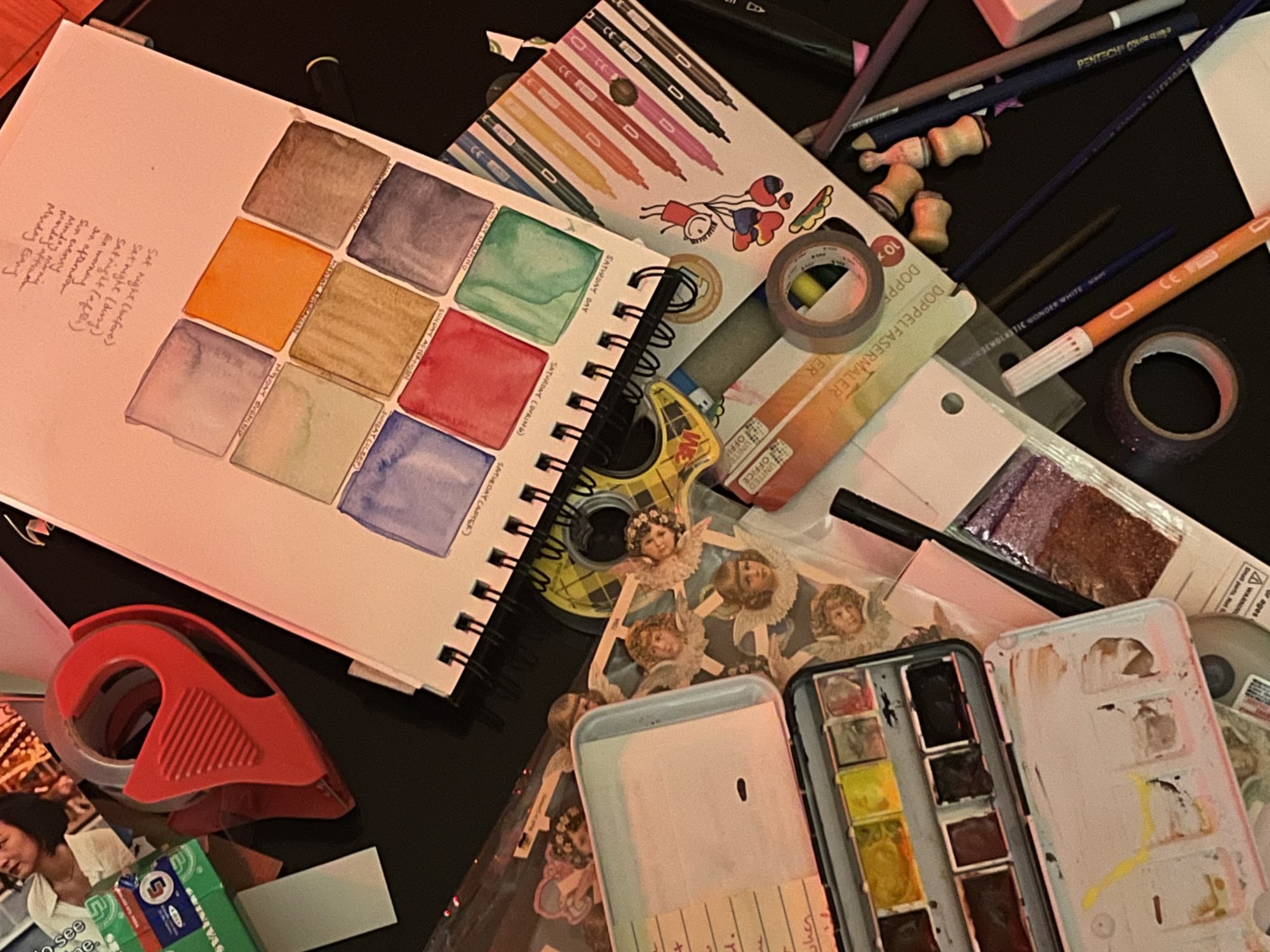
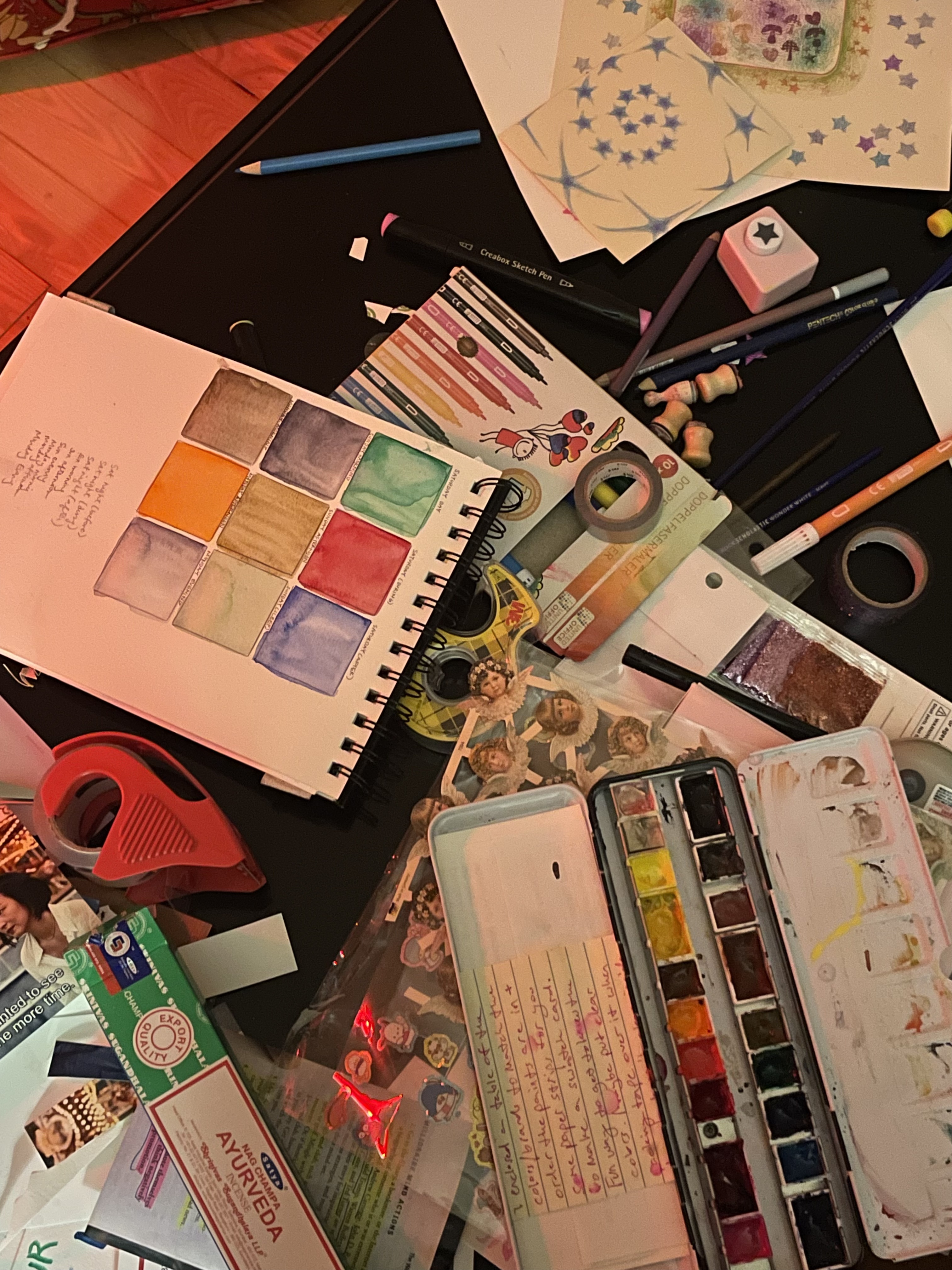
My entire adulthood has been spent in a state of anabolism–in going out almost every night, spending too much money, and overextending myself generally, all in the effort to stave off aloneness. And now I find myself, sofa, candles, cat, allein, allein. J is coming over tonight for arts and crafts and I feel, in a surprising moment of okayness, something akin to equanimity–for attempting to dissolve the will, for trying to forego fixated hopes, and for doing my best to explore this pain with compassion.
 I Woke Up For This