
Growing up, my mother spent her summers in Winnipeg and Grand Beach, a nearby lake town, with her grandparents. I had harbored glamorous visions of these trips, despite the knowledge that my great-grandparents’ beach cottage had an outhouse and that their water came from a well. This vision of allure came from my Winnipeg-born grandmother, who had patrician sensibilities and a haughtiness which I didn’t realize until after her passing was manufactured. My grandmother had been the product of a modest Canadian upbringing, with working class parents who had emigrated from Germany.
We visited Winnipeg in early July, to see my mother’s second cousin, Rico, my grandmother’s best frenemy, Patricia, and my mother’s childhood friend, Steve, who operates the beloved Assiniboine Park steam train. As we drove through the city, which was fragmented in the way that Midwestern cities are, my mother was overwhelmed with nostalgia–for the defunct Hudson Bay Company store, where her mother and Patricia had modeled, for the corner bodega in her grandparents’ neighborhood, which was still in business, but mostly for my great-grandparents’ house itself.
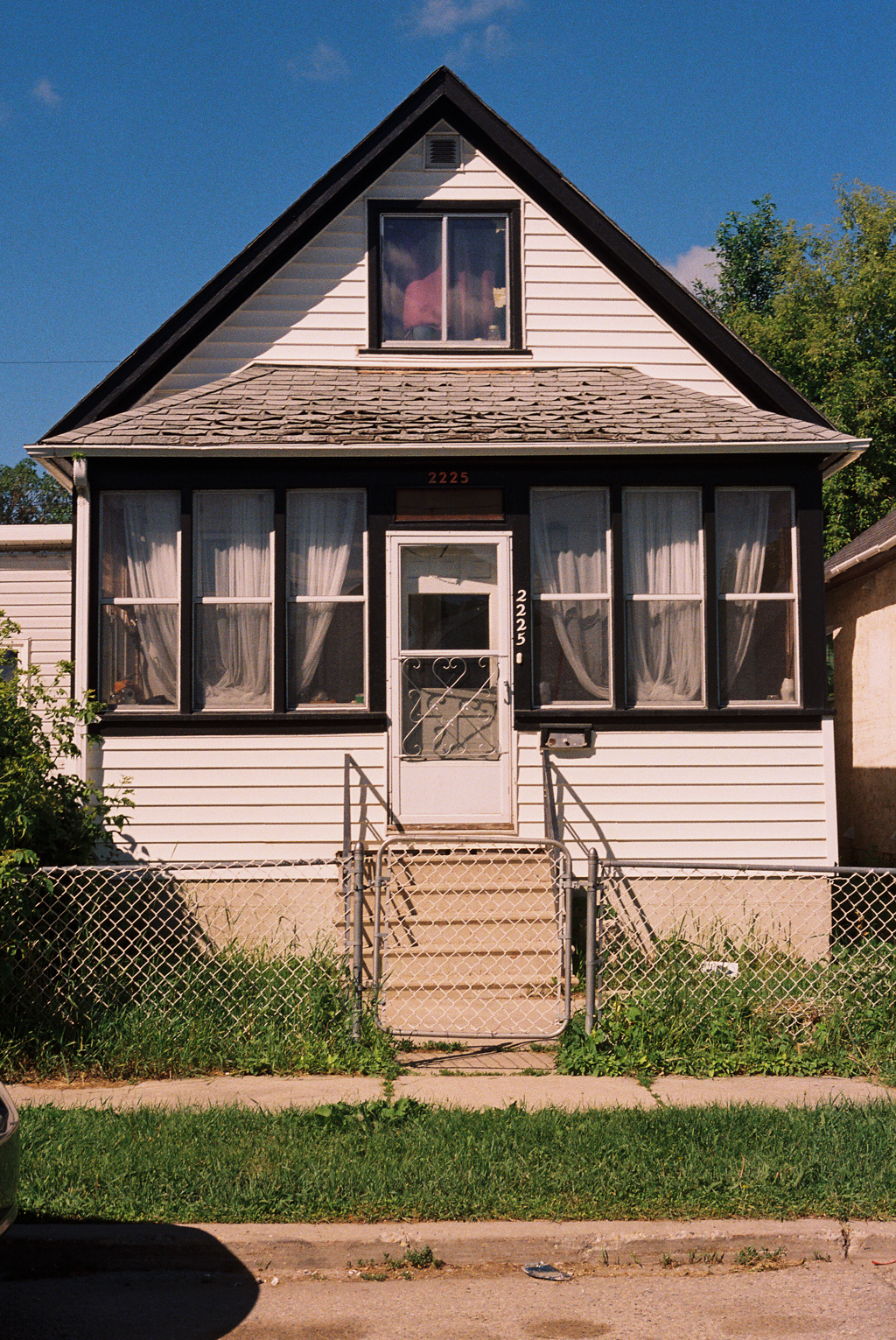
When we stopped at Oma’s and Opa’s Winnipeg home, my mother looked on wistfully, for the house which had been such a source of pride for her grandparents, had become dilapidated. Her Opa’s garage-cum-studio was in a state of decline–my mother recalled again and again its mid-seventies glory. Seeing the house in such poor shape struck my mother as an affront to her grandparents’ legacy of meticulousness.
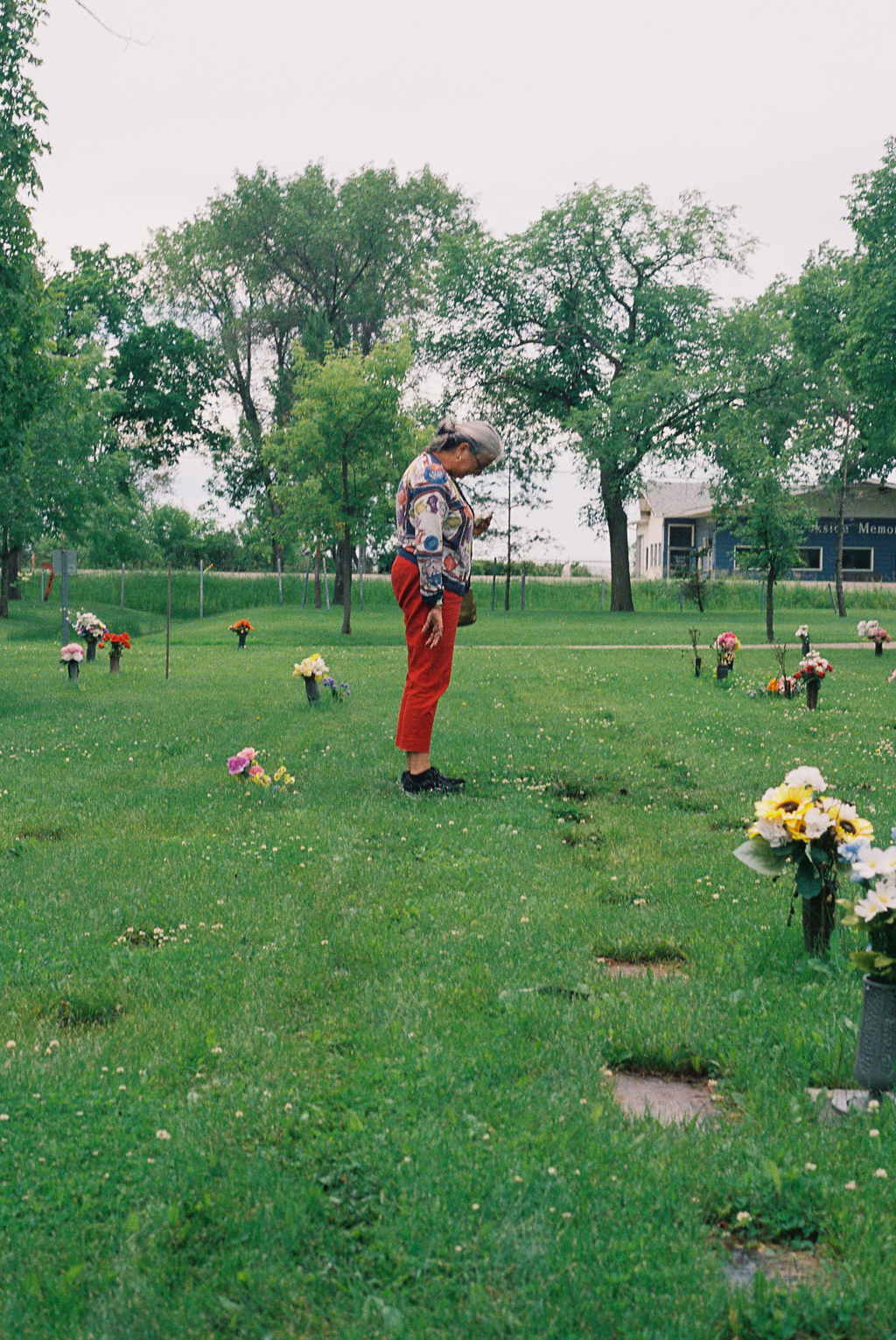
Our visit was marked by three cemetery visits, one at the request of Patricia, and twice at the request of my mother, to find the gravestones for her grandparents. It wasn’t until our second visit to Brookside Cemetery that we were able to locate their graves, which consisted of flat rectangular markers set far too deeply into the grass. It had rained torrentially for the past few days, and as we looked on over the hundreds of flat markers for Violetta and Reinhold Fluegert, the tension grew.
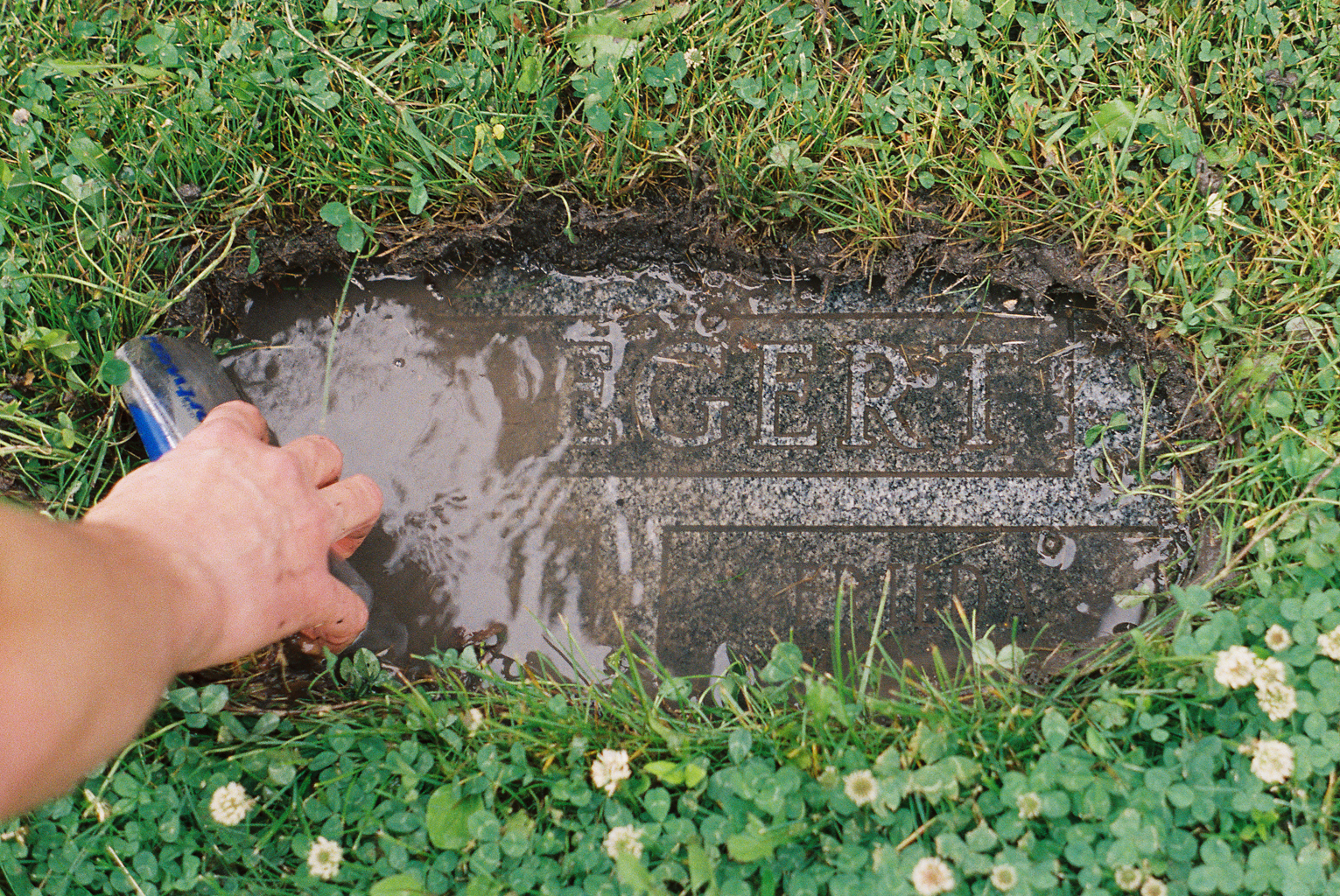
We silently hoped that Oma and Opa would be above ground, but encountered no such luck. Without missing a beat, my father bent down and began digging through the mud and the water and the grass, first with a plastic water bottle, and then with his bare hands as my mother looked on, misty-eyed.
My father’s fervent digging was an innately tender act, as are most of his acts when it comes to my mother. The grass seemed not to have been cut in months as it grew several inches above the flat marker, and though my father digged and digged, we could only catch a fleeting glimpse of “Fluegert” as the space above the marker kept filling with the water that he’d scooped out of it. My mother sobbed-there was something tragic about her grandparents’ legacy being reduced to a mostly obscured, water-logged marker.
 I Woke Up For This